GROK · DEPLOYED / LIVE-TESTED
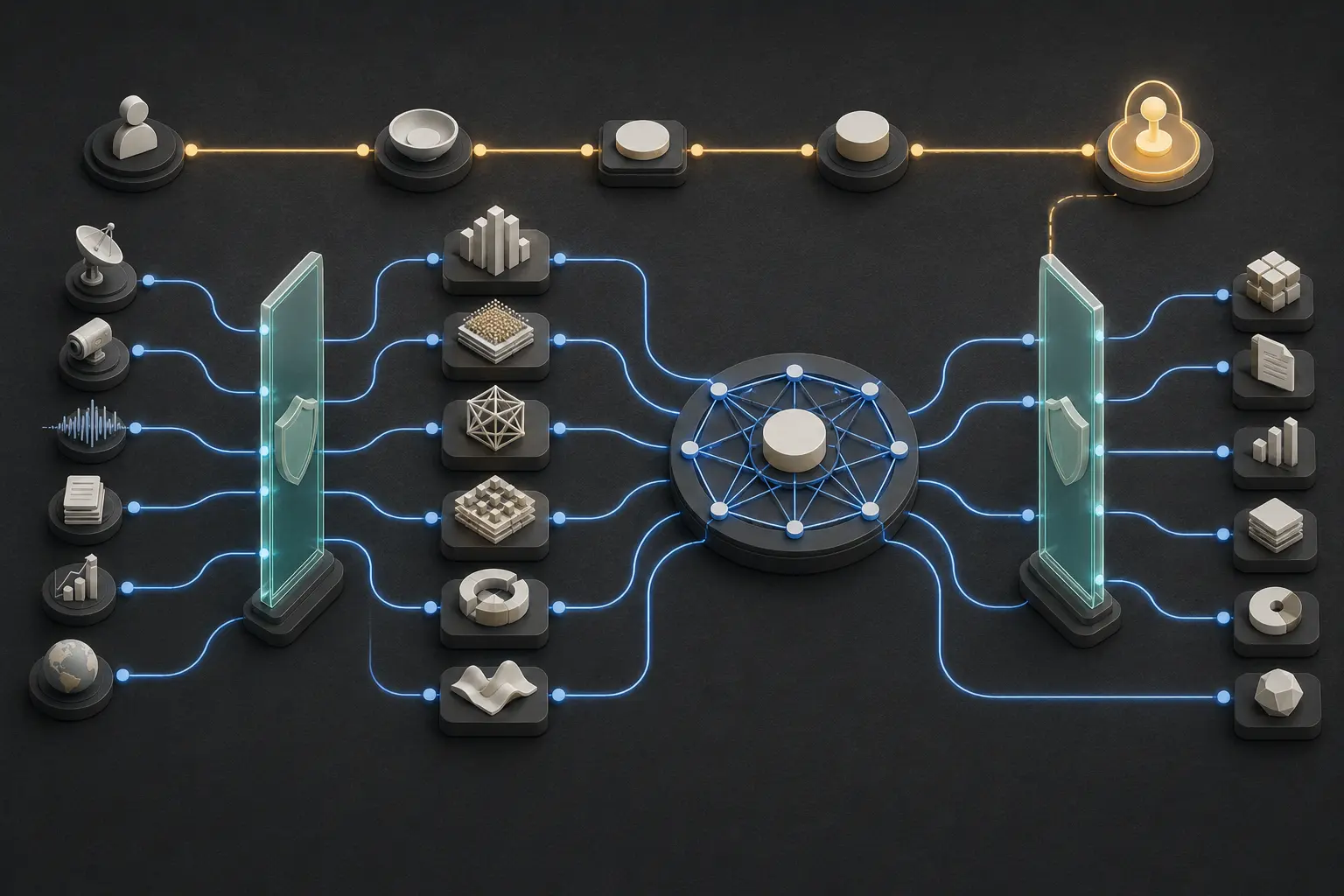
CCW / Constellation runtime
Governed multi-lane runtime with seven configured lanes, four seated Boardroom members, and route-binding receipts.
Open with Grok →Inputs are anchored. Seats stay attributable. Disagreement survives synthesis. Verification remains independent. Human authority is not another model in the loop.
Status words are boundaries, not trophies. Build state, evidence state, and the approved external description remain separate on every page.
Governed multi-lane runtime with seven configured lanes, four seated Boardroom members, and route-binding receipts.
Open with Grok →Sovereign architecture proof with locally operated models and no required network path for demonstrated behavior.
Open with Deep →Governed persona-room surface where distinct seats reason together under human authority.
Open with Lola →Proposed veteran application. No field test, clinical validation, or institutional deployment is claimed.
Open with Claude →A traceable recommendation schema. It does not rank routes, dispatch work, or make the decision.
Open with Kimi →A presentation-only experiment deployed behind a feature flag that is off by default.
Open with Gemini →These are application directions and collaboration targets—not claims that NameONE has deployed into the institutions described.
Patient, veteran, and caregiver-facing systems where memory, uncertainty, privacy, and human escalation must be explicit.
On-device intelligence for environments where governance cannot depend on a cloud connection.
Multi-model analysis where leaders need the dissent, sources, constraints, and authority trail—not only the final paragraph.
If a capability changes, the label should change before the marketing does.
Architecture and intent exist. Not a claim of implementation.
Running in NameONE’s environment. Field validation may remain open.
Exercised with tests or receipts. Scope and evidence still matter.
Shown working in a bounded scenario. Not generalized readiness.